





TLDR:
How do you rebrand your product effectively?
Effective rebrands begin with research. The rebranding process involves understanding perception gaps through customer and internal interviews, defining precise positioning, and creating visual identity that translates strategy into form. Success requires more than a new logo. It demands a comprehensive rollout across every touchpoint, internal culture shifts, and measurable indicators tracked over months.
How can non-designers (people from a non-design background) add value during a rebranding project?
Non-designers can add value by ensuring the rebrand solves the business problem that prompted it, asking whether the identity resonates with the intended audience, clarifies positioning, and can be executed consistently across the organization.
Companies that execute rebrands well see measurable results within the first few quarters: conversion rates improve as prospects understand the offering faster, sales cycles shorten because positioning clarifies competitive advantage and customer acquisition costs drop as brand clarity attracts the right audience.
These outcomes come from treating rebranding as a strategic business transformation, following a structured process that connects every brand decision to revenue impact, market differentiation, and sustainable growth.
However, most companies approach rebranding backwards.
They start with design exploration, debate color palettes and typography, then try to retrofit a strategy around aesthetic choices. Six months later, they launch a beautiful new identity that doesn't move the business forward. Sales teams still struggle to explain what the company does. Prospects still choose competitors.
The fundamental problems that prompted the rebrand remain unsolved, now wrapped in prettier packaging.
Successful rebranding execution starts with a different question: what business problem are we solving? The answer shapes everything that follows.
How to Approach Rebranding Successfully
Effective rebrands begin with research. This means talking to the people who interact with your brand from the outside. Customers, yes, but also prospects who didn't convert, partners who refer business, even competitors' customers who considered you and chose differently. The goal is to understand the gap between perception and reality. Where does confusion arise? What assumptions do people make? What language resonates, and what falls flat?
Internally, the exercise is equally important. Interview teams across functions. How do salespeople describe the company in discovery calls? What does customer success hear most often in onboarding? What questions does HR ask candidates? These conversations surface the informal narratives that have developed organically, often revealing surprising consistency in how different teams have adapted their language to fit the company's evolution.

From this foundation, positioning can be defined with precision. Clear articulation of where the company sits now, who it serves, what it delivers, why it matters, and how it differs from alternatives. This clarity forms the anchor for everything that follows: visual identity, messaging, tone, and even organizational structure.
Only then does the creative work begin. When it does, strategy guides the process. Designers receive a brief to create a system that communicates specific attributes to a defined audience. The visual identity becomes a translation of positioning into form, color, and type.
Rebranding Case Study: Dropbox's Repositioning from Storage to Collaboration
Dropbox spent years being known primarily as a cloud storage platform. By 2017, the company had evolved into a comprehensive collaboration platform with features for team workflows, file sharing, and project coordination. The brand still communicated "place to store your files" when the business had become "workspace for team collaboration."

The Dropbox rebrand addressed this perception gap directly. Dropbox introduced a vibrant, expressive visual system with diverse illustrations, bold colors, and a complete overhaul of brand language. The creative direction felt intentionally different from typical enterprise software, signaling that collaboration doesn't require corporate sterility.
Research with customers revealed that people associated cloud storage with cold, technical infrastructure. The new brand emphasized the human side of collaboration: creative expression, diverse perspectives, and the energy of teams working together. Every visual element reinforced this positioning, from illustration style to interface design to marketing campaigns.

The shift worked. Dropbox successfully moved perception from commodity storage to a premium collaboration platform, supporting growth in enterprise accounts and higher-value customers who needed sophisticated team tools rather than simple file backup.
Rebranding Case Study: Old Spice's Cultural Reset
Old Spice faced perception as a dated brand for older men, a challenge that threatened long-term viability as the core customer base aged. The company needed younger consumers to see Old Spice as relevant without alienating existing customers who remained loyal to the product.
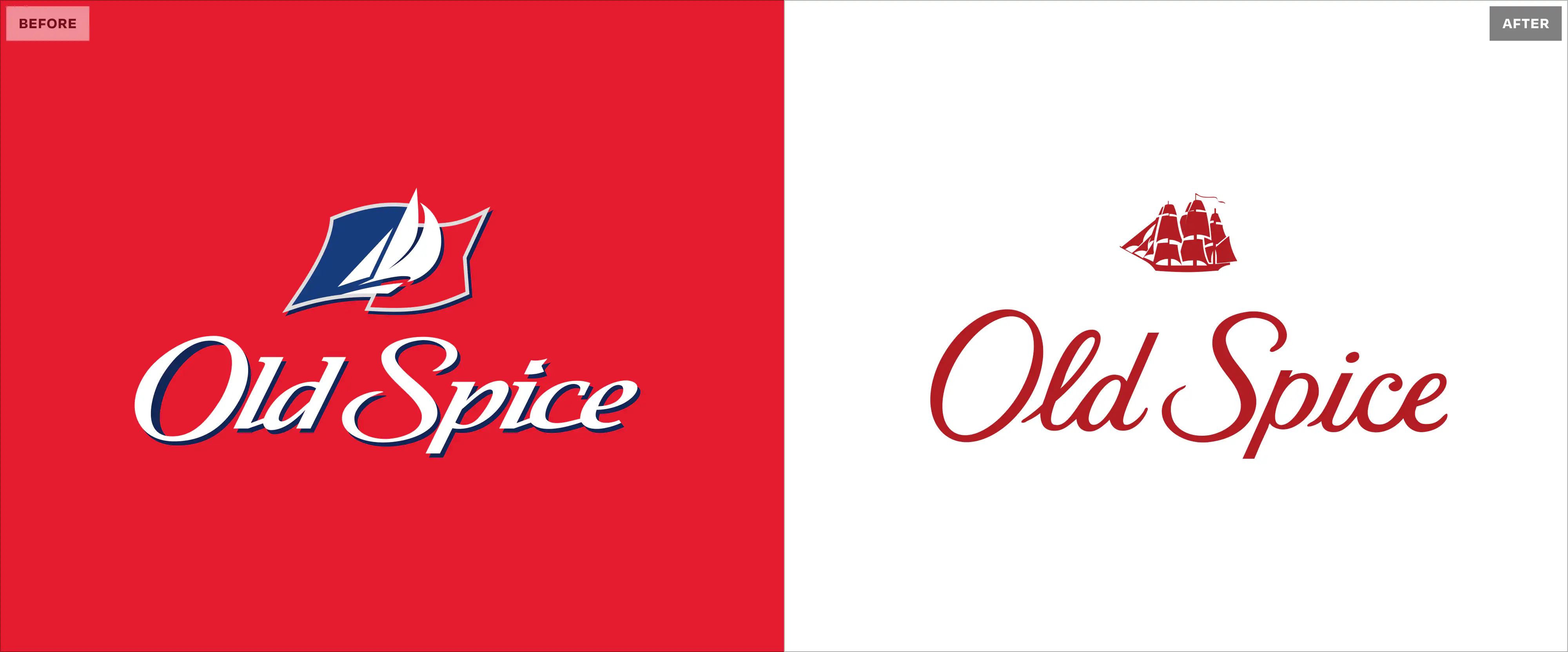
The 2010 rebrand centered on the "The Man Your Man Could Smell Like" campaign, introducing absurdist humor and cultural self-awareness. The creative work was bold: Isaiah Mustafa's rapid-fire monologues, impossible scenarios, and direct address to female viewers who often purchased men's grooming products.
This rebrand succeeded through strategic clarity about audience and tone. Old Spice claimed confidence, humor, and self-awareness as brand attributes. The visual system and messaging aligned completely with this positioning, creating consistency across packaging, advertising, retail presence, and social media.
Sales increased significantly among younger demographics while existing customers continued purchasing. The rebrand demonstrated that even heritage brands can shift cultural perception through strategic repositioning backed by creative execution that takes clear risks based on audience insight.
The Role of Non-Designers in Rebranding
If you're leading or participating in a rebrand without a design background, your value lies in asking the questions designers can't answer alone:
- Who is this really for? When a design team presents options, the instinct is often to react based on personal preference. The more useful question is whether the identity will resonate with the intended audience. Non-designers bring market knowledge, customer insight, and business context that shape this assessment.
- Does this make our positioning clearer? Visual identity should reinforce strategy. If a design direction feels striking but doesn't communicate what the company does or why it matters, it needs refinement. Non-designers can push for alignment between aesthetic appeal and functional clarity.
- Can our team execute this consistently? A brilliant brand system that's too complex to implement becomes a theoretical exercise. Sales needs templates they can customize. Customer success needs assets that reflect the new identity without requiring design support for every adjustment. Non-designers understand operational constraints and can advocate for systems that are both ambitious and practical.
A non-designer's role is about ensuring the rebrand solves the business problem that prompted it in the first place.
What Changes About Your Brand During the Rebranding Process
During a rebrand, every customer touchpoint requires attention. A rebrand typically requires rethinking your email signatures, proposal templates, product UI, support documentation, social media profiles, conference booth graphics, and even the language used in automated messages. These details feel minor individually, but inconsistency across them undermines the entire effort. Customers notice when the LinkedIn page doesn't match the website, or when a sales deck still uses old positioning.
Rebranding Case Study: MicroSave Consulting's Evolution to MSC
MicroSave Consulting faced a perception problem despite 20 years of impact in financial inclusion consulting. The firm had worked with governments across 50+ countries, yet lacked global recognition. Internal research revealed that stakeholders saw the company as the "grandparent" of the industry, which felt misaligned for one of the younger consulting firms competing against the Big 4.
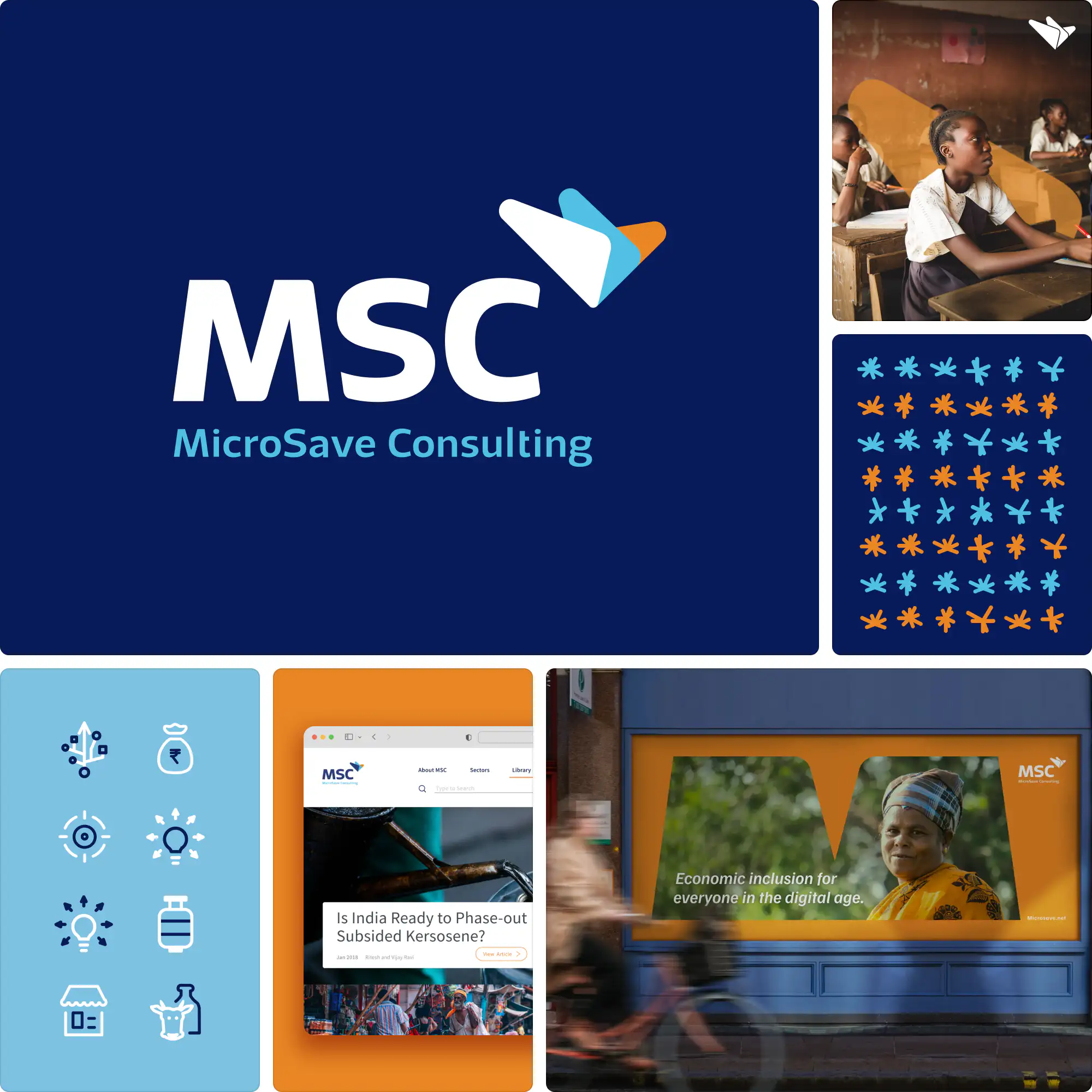
The MicroSave rebrand by Sparklin addressed this comprehensively. The name shifted from MicroSave Consulting to the acronym MSC, creating a more contemporary expression. The visual identity moved from traditional consulting aesthetics to sophisticated, modern design language that communicated innovation and professionalism. Every brand touchpoint was redesigned: letterheads, proposals, presentations, and collateral all reflected the new positioning.
The web architecture required particular attention. MSC needed to showcase a vast library of international data accessible across different geographical markets. The solution involved creating a user-friendly interface that allowed clients and prospects to easily search and access region-specific information, making the breadth of MSC's expertise immediately visible.
The results validated the comprehensive approach. MSC saw a 70% increase in client partnerships and 16% growth in digital government projects. The rebrand successfully repositioned the firm from traditional consultancy to a modern, relevant partner for complex financial inclusion challenges. Most importantly, the new identity resonated with younger decision-makers in government and international development while maintaining credibility with existing partners.

How to Help Your Internal Teams Adapt to Your Rebrand?
Internal culture shifts during rebrands, sometimes in unexpected ways. A new brand can energize teams, giving them clearer language to describe their work and stronger materials to support their efforts. It can also surface resistance, particularly if people feel attached to the old identity or weren't included in the process. Managing this transition requires communication well before launch: context about why the change matters, how it was developed, and what it means for different roles.
The timeline for a rebrand extends beyond launch day. Full adoption might take six months or longer, particularly in larger organizations with distributed teams, legacy materials, and established customer relationships. Planning for this gradual rollout, rather than expecting instant transformation, sets realistic expectations and allows for adjustment as real-world feedback arrives.
Measuring Whether Rebranding Worked
Rebrands resist simple before-and-after metrics, but certain indicators signal success or failure.
- Qualitative feedback from sales offers early signals. Are discovery calls becoming easier? Do prospects demonstrate better understanding of what the company offers? Is less time spent correcting misconceptions? These shifts often appear before quantitative data changes.
- Customer acquisition patterns reveal alignment. If the rebrand aimed to attract a different audience, watch whether inbound leads match that profile. If the goal was entering new markets, track whether awareness and consideration grow in those segments. Misalignment here suggests messaging hasn't landed as intended.
- Internal adoption shows whether the organization has embraced the change. Are teams using the new language consistently? Do materials across departments reflect the updated brand? Is there visible pride in the new identity, or quiet reversion to old habits?
Some results take time. Brand perception shifts gradually. SEO authority for new positioning keywords builds over months. Market repositioning requires sustained effort, not instant recognition. Patience matters, but so does tracking whether movement is happening in the right direction.
Case Study: Gucci's Measured Renaissance
When Alessandro Michele became creative director in 2015, Gucci faced declining relevance with younger luxury consumers. The brand had a strong heritage but felt inaccessible and dated to millennial and Gen Z audiences who were becoming increasingly important to the luxury market growth.
Michele introduced maximalist design, eclectic references, and cultural fluidity that resonated with younger consumers' values around self-expression and individuality. The rebrand extended across products, retail environments, advertising, and digital presence. Gucci measured success through multiple indicators: sales growth among target demographics, social media engagement rates, brand perception studies and most importantly, whether younger customers were choosing Gucci over competitors like Saint Laurent or Balenciaga.

The results validated the strategy. Gucci's revenue doubled within three years, driven primarily by younger consumers who hadn't previously considered the brand. The success came from clear positioning executed consistently across every touchpoint, measured through both financial metrics and perception data that confirmed the rebrand achieved its strategic objectives.
Moving from Rebrand Strategy to Results
Rebranding execution transforms strategic clarity into market outcomes. The process requires patience, coordination, and willingness to make decisions based on audience needs rather than internal preferences. Companies that approach rebranding as a strategic discipline rather than a creative project see measurable improvements in customer understanding, market positioning, and business performance.
The practical steps remain consistent regardless of company size or industry. Start with research that reveals true perception gaps. Define positioning with precision. Develop creative systems guided by strategy. Roll out changes comprehensively across all touchpoints. Measure indicators that connect brand changes to business outcomes. Each step builds on the previous one, creating a foundation that supports sustainable growth rather than temporary visibility.

Rebranding succeeds when it makes choosing your company easier for the right customers. The visual identity, messaging, and brand experience should remove friction from the decision-making process, clearly communicating who you serve, what you deliver, and why it matters. When executed well, rebranding doesn't just change how your company looks—it strengthens how your business competes, grows, and creates value for customers who need what you offer. The companies that rebrand successfully understand this truth: brand strategy drives business results when execution translates positioning into every customer interaction with clarity, consistency, and strategic purpose.
Frequently Asked Questions about Executing a Rebrand
How long should the research phase of a rebrand take?
Research typically spans 4-8 weeks, depending on company size and complexity. This includes customer interviews, internal stakeholder conversations, competitive analysis, and perception studies. Rushing this phase compromises everything that follows.
Who should be involved in the rebranding process?
The core team should include leadership, marketing, sales, customer success, and product. Designers and strategists guide the process, but input from customer-facing teams is essential for understanding real perception gaps.
How do you get buy-in from stakeholders who resist change?
Early involvement is key. Share research findings that demonstrate the business problem. Show how the rebrand solves specific challenges different teams face. Create opportunities for input, but maintain decision-making clarity.
Should you announce a rebrand publicly?
It depends on the scope and your audience. Major rebrands benefit from clear communication about what's changing and why. Subtler repositioning often works better with a gradual rollout that existing customers barely notice.
What's the biggest mistake companies make during rebranding?
Starting with creative work before establishing strategic clarity. Visual identity without a strategic foundation produces systems that don't solve the business problem that prompted the rebrand.
How do you maintain brand equity during a rebrand?
Identify which elements carry the most recognition and equity with your audience. Often, color palette, tone, or certain visual elements can be preserved while other aspects evolve. The key is changing what needs to change without discarding what already works.
Can a rebrand be done in-house, or should you hire an agency?
This depends on internal capabilities and bandwidth. Rebrands require specialized skills in research, strategy, and design. Many companies succeed with hybrid approaches: external strategy and design support with internal project management and rollout.
How do you handle legacy materials during transition?
Create a phased approach. Prioritize high-visibility touchpoints first (website, key sales materials, social media). Allow lower-priority materials to transition naturally as they're updated for other reasons. Set a sunset date for all old materials, typically 6-12 months post-launch.