




In today's digital-first world, brands are sitting on more customer data than ever, yet only 15% of companies effectively leverage AI for personalization. As consumers navigate fluidly across screens, devices, and states of mind, their expectations have evolved from being known to being understood.
The next era of experience design shifts from predictive efficiency to perceptive intelligence: understanding intent, emotion, and context in real-time to meet people where they are emotionally, contextually, and behaviorally.
This is where AI-driven hyper-personalization comes in. Powered by machine learning, predictive analytics, and emotion-aware design systems, it is redefining how brands communicate, connect, and evolve. According to a report by McKinsey, with 71% of consumers now expecting personalized experiences and 76% expressing frustration when they don't receive them, AI personalization has shifted from being a marketing function to a strategic design capability that drives measurable ROI.
From Spotify's dynamic listening experiences to Nike's personalized retail ecosystem and Starbucks' predictive offers, brands are thinking not in campaigns, but in adaptive customer relationships.
The Opening Shift: From "Hello You" to "How Are You Feeling Right Now?"
Not long ago, personalization in marketing meant little more than "Dear [Name]" in an email or showing an ad for a product you'd already clicked. It felt efficient, but not human.
Now imagine: you step into a store, your app recognizes you, the lighting adjusts, the playlist changes, and the app recommends something aligned not just with your past behavior but with your current mood and context.
The brand feels less like it's talking to you, and more like it's right there with you.
This represents a fundamental rewiring of the brand–consumer contract: customers are willing to let brands into their lives only if those brands deliver experiences that feel meaningful, respectful, and contextual. That's the promise of AI personalization at scale.
The business impact is undeniable: companies using AI-driven personalization generate 40% more revenue from personalization activities than average players, while consumers spend an average of 38% more when experiences are personalized. Additionally, personalization can deliver up to 800% ROI on marketing spend while boosting sales by 10-20%.
The Illusion of Personalization (So Far)
Personalize or perish has been marketing's most repeated mantra. But most implementations have been shallow. Traditional personalization, in practice, meant segmentation: 10 personas, 10 campaigns. It was efficient but rarely empathetic.
Most brand systems still treat people as static data points based on their gender, age, and purchase history, completely ignoring the nuances of human behavior: intent, emotion, and change over time. Even sophisticated CRM campaigns often operate in silos. The app doesn't know what the website knows, and the retail associate doesn't know what the chatbot learned.
The result? Fragmented experiences that mimic personalization but never feel personal.
That's where AI and machine learning become game-changers. Not because they collect more data, but because they connect the dots between data points in milliseconds to create contextually relevant experiences.
The AI Inflection Point: Real-Time, Emotion-Aware, Everywhere
AI-powered personalization is accelerating into a new era as brands shift from static segmentation to real-time, intelligence-driven experiences. Deloitte’s latest “Personalizing Growth” study shows that consumers reward this shift: more than half say they’re more likely to purchase from a brand that delivers relevant, adaptive experiences, and many are willing to share more data when the value exchange is clear.
Beyond automation lies attunement: the quiet art of sensing what people need before they ask. This marks a shift from transactional efficiency to perceptive intelligence—the kind that makes a customer feel seen without ever being watched.
Two capabilities define this shift:
1. Real-Time & Context-Aware Intelligence
AI personalization systems are evolving from analyzing past behavior to interpreting real-time context. They account for location, device, time of day, weather, environmental factors, and micro-moments to tailor the experience instantly.
Real-world examples of AI personalization:
- Starbucks' Deep Brew AI uses machine learning to integrate order history, time, weather, and even traffic patterns to predict what customers might want before they order. The Starbucks rewards program grew from 5 million to 12 million customers by leveraging hyper-personalization.
- CaratLane uses a unified data-and-service layer across its omni-channel operations. In over 270 stores, sales associates access customers' past purchases, wish-lists, loyalty status, and custom orders via the 'EZ Sales' app. This enables CaratLane to deliver offers and experiences that feel seamless across online, in-store, and mobile touchpoints.
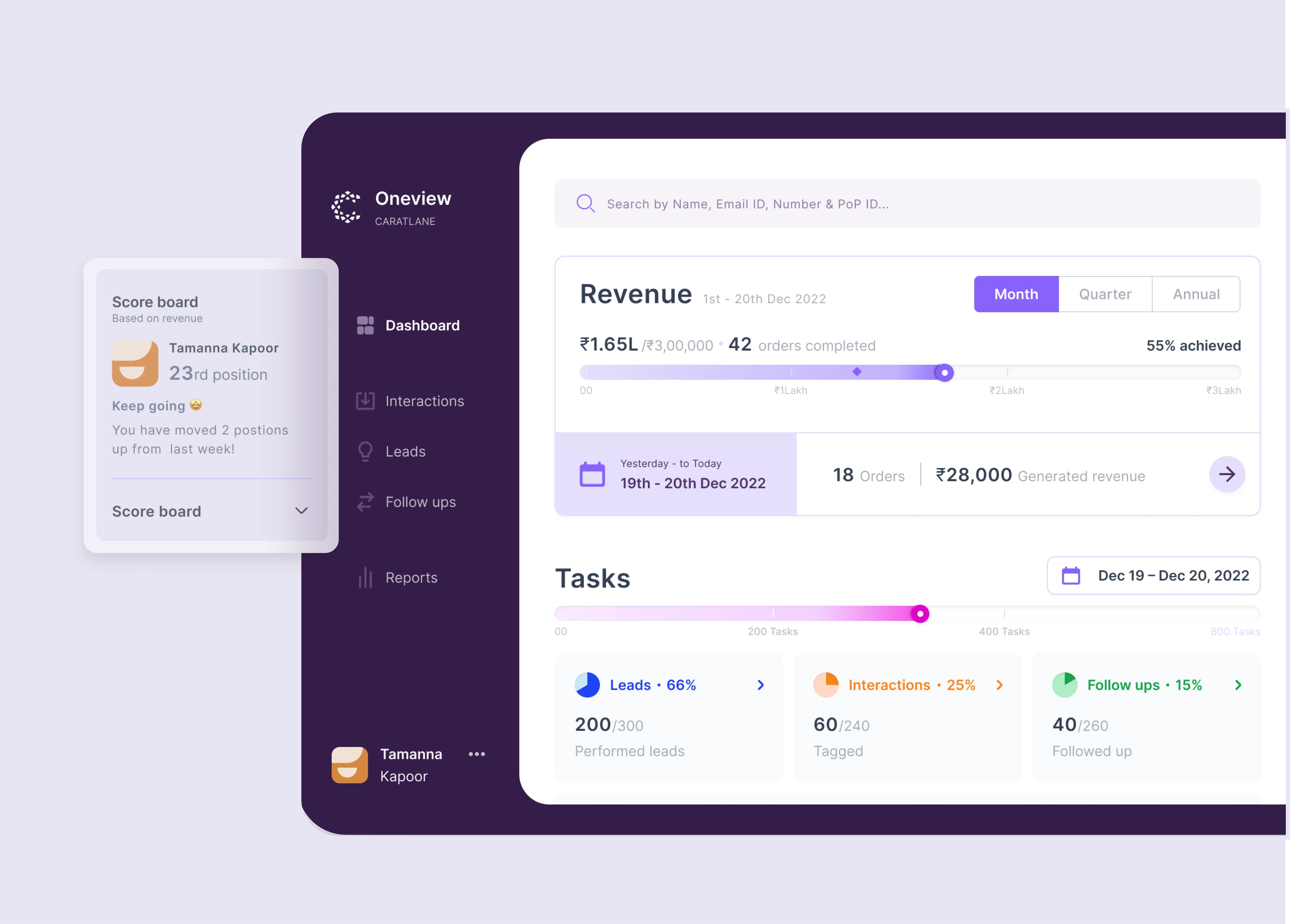
These examples show how brands can combine context-aware personalization and convenience to create intuitive, continuous experiences that drive customer loyalty.
2. Emotion & Behavior Signals: The New Frontier of AI Personalization
AI's evolution now extends beyond behavior. It's beginning to interpret emotion. Understanding not just what people do but how they feel is becoming the new frontier of intelligence.
Spotify's personalization engine generates 381 million unique versions of Spotify. Every user's feed, playlist, and recommendations are algorithmically unique based on their emotional and listening patterns, a prime example of emotion-aware AI personalization.
Nike, through its Nike By You platform and fitness ecosystem, integrates behavioral and environmental data to recommend products and workouts that align with users' goals and motivation levels, creating personalized shopping experiences at scale.
.avif)
This is emotion-aware personalization: experiences that feel responsive, almost sentient, because they adapt to how you feel, not just what you do.
The Experience Design Shift: From Interfaces to Ecosystems
Customer experience design has evolved from optimizing single touchpoints to orchestrating adaptive ecosystems. In the past, designers focused on improving conversion funnels and user flows. Today, the challenge is to design systems that think, not just screens that work.
Every interaction, a product recommendation, an app interface, a notification, is now part of an interconnected network. When one node learns, the entire system evolves.
Examples of AI-powered personalization at scale:
- Netflix personalization: Instead of relying on a single homepage for all users, Netflix generates a fully customized interface using hundreds of machine-learning models that assess viewing history, session behavior, genre affinity, time-of-day patterns, and even completion rates. The recommendation system is responsible for the majority of what people end up watching, as Netflix has stated in its tech blog and engineering talks: without personalized rankings, rows, and suggestions, most titles would never be discovered at all. Even the artwork you see is dynamically selected using an in-house system called Aesthetic Visual Analysis, which tests multiple thumbnail variants and serves the one most likely to appeal to each viewer’s tastes.

- Amazon's recommendation engine: According to Amazon Science, its system is built on large-scale machine-learning models that analyze browsing patterns, purchase history, and real-time signals to personalize each user’s homepage and search results. Amazon’s latest retail updates also confirm that generative AI now further enhances recommendations and product descriptions. Research shows these personalized suggestions significantly influence user decisions, making recommendation-driven discovery a central part of Amazon’s growth engine.
These platforms are building dynamic experience systems that learn and adapt, creating a sense of emotional continuity across every customer journey. That’s the hallmark of effective hyper-personalization strategies.
From Systems to Ecosystems: Designing for Fluid Identities
The challenge with AI personalization was never about having enough data. It was about having the right data. It's about designing experiences that make that data feel human and contextually relevant.
Most organizations are still structured around departments and channels. But consumers don't experience brands that way. They move between roles and contexts fluidly; a single person can be a parent, a professional, and a gamer, all before dinner. Their intent and emotion shift constantly.
Designing one static experience for them misses the point. Designing an adaptive ecosystemaround them builds trust and drives customer lifetime value (CLV).
To do that, brands must align three key layers:
- Data Design – Unify behavioral, contextual, and emotional signals into one living customer graph using predictive analytics and machine learning
- Behavioral UX – Design interfaces that interpret micro-patterns, from pauses and scrolls to sentiment and tone, creating personalized user experiences
- Brand Systems – Ensure the brand voice and visual language stay consistent, even as content and context evolve across touchpoints
When these layers finally come together, that’s when customer-centric AI personalization happens.
Brands stop acting like systems and start behaving like companions.
The New Brand Playbook: From Mass Communication to Micro-Relationships
The old playbook optimized for reach; the new one optimizes for resonance and personalized customer engagement.
Brands no longer win by broadcasting to millions. They win by adapting to one, millions of times over and the core principle of hyper-personalization in marketing.
1. Start with Data Empathy and Privacy-First Personalization
AI-powered personalization begins with understanding, not just mining data. Brands must use data to create value for users. Apple's privacy-first approach demonstrates that personalization and transparency can coexist and proves trust is the new currency of personalization.
2. Design for Moments, Not Channels
Consumers live in micro-moments, not channels: "I need this now," "I'm bored," "I want to feel inspired." Designing experiences around moments of intent using real-time personalization helps brands stay relevant across fragmented touchpoints and drive conversions.
3. Automate Responsibly with AI Ethics
Marketing automation is powerful, but overuse can make a brand feel mechanical. AI's true purpose is to extend human understanding across every interaction. Every automated response should feel intentional, balancing efficiency with empathy in conversational AI and chatbot experiences.
4. Bridge Brand and Product Through Experience Design
As interfaces become the new brand spaces, the line between marketing and UX dissolves. Netflix, Spotify, and Duolingo show how brand storytelling and user experience design now live inside the product itself. A brand's story now lives in its responses. Every interaction shapes the narrative and builds brand loyalty through personalized experiences.
The Role of Designers: Building Emotionally Intelligent Systems
For designers, AI in design opens new dimensions of creativity, freeing time for deeper thinking and exploration. Designers now shape how systems learn, how data is visualized, and how intelligence feels.
The craft has evolved from visual and interaction design to the broader discipline of experience orchestration and service design.
AI-driven design systems require designers to think probabilistically, not "what should a user do next?" but "what might they want next?", using predictive modeling and behavioral insights.
This shift introduces new roles for design teams:
- Data-informed storytellers who translate insights into experiences using design thinking
- Behavioral UX strategists who interpret human cues through user research and analytics
- Experience architects who bridge technology and empathy through customer journey mapping
This evolution from designing interfaces to designing intelligence is the future of UX design and digital experience.
The Future: Adaptive, Ethical, and Human
Hyper-personalization at scale brings both power and responsibility. The next frontier is AI ethics and responsible data usage.
Consumers are becoming more conscious about how their data is used. Regulations like GDPR and India's DPDP Act reflect a growing demand for transparency. With 50% of companies reporting that recent privacy regulations have made personalization more difficult, brands that handle personalization responsibly. Brands that make their services opt-in, transparent, and value-driven will lead the next decade of customer trus
The future brand experience system must be:
- Adaptive – Learns continuously from interactions using machine learning algorithms
- Ethical – Uses data responsibly and transparently with privacy by design
- Human – Delivers empathy, not intrusion, through human-centered design
As technology enables ever more personalized experiences, the real measure of a brand will be the depth of the relationships it creates through emotional intelligence and contextual relevance.
Where Sparklin Fits In: Building AI-Powered Experience Systems
At Sparklin, we believe the future of design lies in intelligent ecosystems and experiences that sense, learn, and evolve using AI and machine learning.
We help brands move from product and campaign thinking to experience system thinking, where data, design, and behavior converge to create living brands that deliver personalized customer experiences at scale.
Sparklin’s AI Personalization Approach
Our comprehensive methodology combines:
- Behavioral UX systems that predict and adapt to intent using predictive analytics and user behavior analysis
- AI-integrated design frameworks that unify channels into seamless journeys through omnichannel personalization
- Brand system thinking that ensures consistency and emotion at scale across all customer touchpoints
- Data-driven design that leverages first-party data and customer data platforms (CDP) for intelligent personalization
AI amplifies creativity, empowering designers and strategists to craft experiences that are both efficient and emotionally intelligent.
Real-World Impact: CaratLane Case Study
Our work with CaratLane demonstrates how AI-driven personalization transforms customer experiences. By implementing a unified data layer across 270+ stores, we enabled seamless omnichannel experiences that blend online and offline touchpoints, resulting in increased customer engagement and sales through context-aware personalization.

Contact Sparklin to discuss how we can help you implement AI-driven hyper-personalization strategies that transform your brand–consumer relationships.
Frequently Asked Questions (FAQ)
What is hyper-personalization in marketing? Hyper-personalization uses AI, machine learning, and real-time data to deliver highly customized experiences based on individual customer behaviors, preferences, emotions, and contexts which goes far beyond traditional demographic-based personalization.
How does AI improve personalization ROI?
AI-driven personalization can generate 40% more revenue, deliver 5-8x ROI on marketing spend, reduce customer acquisition costs by 50%, and increase conversion rates by 10-30% through real-time, context-aware experiences.
What's the difference between personalization and hyper-personalization?
Traditional personalization uses basic segmentation (name, location, past purchases). Hyper-personalization leverages AI to analyze real-time behavior, emotional signals, contextual factors, and predictive analytics to create truly individualized experiences at scale.
What are the best tools for AI personalization?
Leading AI personalization platforms include customer data platforms (CDPs), recommendation engines, predictive analytics tools, and experience orchestration systems that integrate machine learning across all customer touchpoints.
How can small businesses implement AI personalization?
Start with pilot programs on specific customer segments, leverage affordable AI tools for email personalization and product recommendations, focus on first-party data collection, and gradually expand based on measurable results.